
The Nasdaq is reeling from a sharp semiconductor sell-off as trade tensions and geopolitical uncertainty rattle the markets. While tech takes a backseat, Berkshire Hathaway’s pivot to AI and a massive SpaceX IPO buzz are keeping investors on their toes.
📊 Market Snapshot
🌍 What's Happening
Markets are undergoing a sharp rotation as the tech-heavy Nasdaq suffers a 4% correction, driven by a cooling in semiconductor valuations and renewed trade tariff fears. While the S&P 500 retreats, the Dow Jones shows resilience, highlighting a flight to value amid geopolitical instability from the 100-day Iran conflict. Investors are recalibrating portfolios toward AI-integrated healthcare and defensive assets as the ECB signals a hawkish shift in global monetary policy.
Today's Hot Topics:
📰 Top Stories
1. Wall Street's 'fear gauge' punches back as the 'crash up' in chip stocks finally reverses
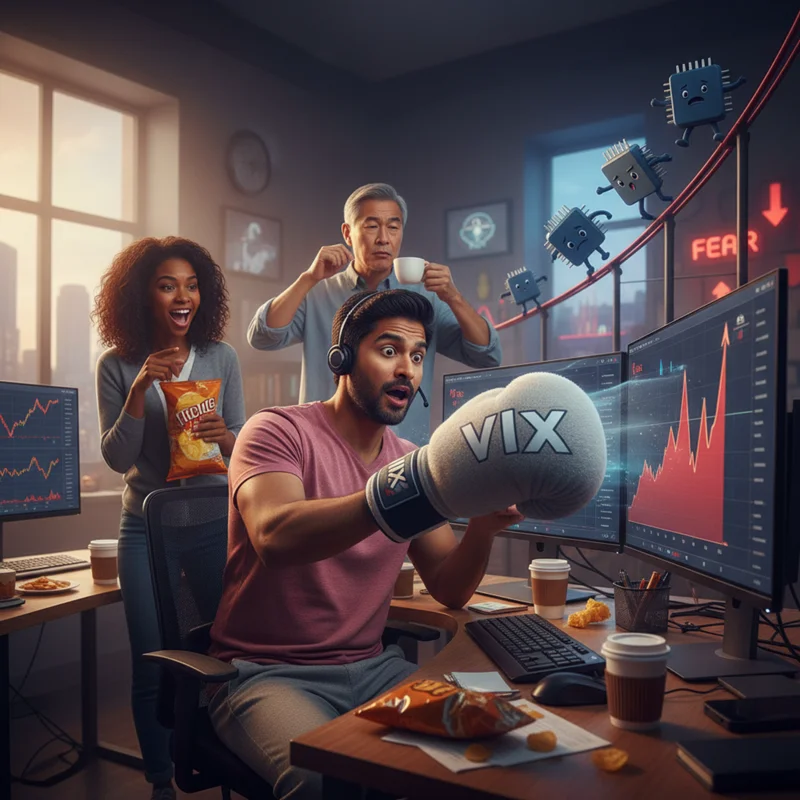
The semiconductor rally has hit a wall, triggering a sharp sell-off that follows Broadcom’s stagnant AI guidance and a historic $1.8 trillion wipeout in the S&P 500. As the VIX spikes, the contagion has spread globally, evidenced by a 5% plunge in South Korea stocks as foreign capital retreats from tech heavyweights. Investors are now aggressively repricing the risk-to-reward ratio of overextended chip stocks, signaling a potential regime change where growth at any price is no longer being rewarded.
💡 Why It Matters
Semis have been the market's primary engine; expect heightened volatility in your tech holdings. Consider trimming exposure to high-beta names if you are over-leveraged in AI hardware.
📈 Market Impact
Broad-based pressure on Nasdaq-listed tech; potential for a rotation into defensive sectors.
🎯 Watch:
$NVDA
$AMD
$AVGO
2. Trump relaunches tariffs war after court struck down levies

The administration is bypassing recent court rulings to reinstate trade tariffs, signaling a return to aggressive protectionism that threatens to inflate input costs and disrupt global supply chains. This move follows a broader strategy of economic pressure, including a recently proposed 25% tariff on Brazilian goods and a sweeping plan to impose 10% levies on 60 other nations over forced labor concerns. Investors should prepare for potential cost-push inflation and earnings volatility as these measures heighten the risk of retaliatory trade actions across the manufacturing and agriculture sectors.
💡 Why It Matters
Tariffs act as a hidden tax on corporate margins. Monitor companies with heavy international supply chain exposure, as earnings guidance may face downward revisions.
📈 Market Impact
Increased cost-push inflation; negative outlook for multinational manufacturers.
3. ECB Steps Up as G7’s Lead Hawk With Interest-Rate Hike Primed
The ECB is diverging from the Fed as it prepares for an imminent rate hike, a move deemed "all but inevitable" by official Peter Kazimir to combat sticky inflation that climbed to 3.2% in May. This policy shift comes as officials like Olli Rehn warn of a growing stagflationary shock, where rising prices collide with stalling economic growth. For investors, this tightening cycle creates significant currency volatility and raises concerns that higher borrowing costs could dampen the earnings of multinational firms with significant European exposure.
💡 Why It Matters
A stronger Euro may hurt European export-heavy stocks. For investors, this signals a potential shift in capital flows toward European fixed income.
📈 Market Impact
EUR/USD appreciation; potential headwinds for European equity indices.
4. Abel goes his own way with new Berkshire investments, including billions for AI
After building a record $397 billion cash pile that signaled a lack of value in current markets, Greg Abel is finally deploying capital to pivot Berkshire Hathaway toward AI. This strategic shift mirrors the "legacy-to-AI" transition successfully demonstrated by International Business Machines (IBM) and follows the aggressive ecosystem-building approach recently adopted by Nvidia. By moving beyond traditional value plays, Abel is positioning the conglomerate to capture the long-term growth potential of the evolving tech landscape.
💡 Why It Matters
Berkshire's entry validates AI as a long-term capital allocation strategy rather than a speculative bubble. Watch for institutional money to follow this 'value-tech' hybrid approach.
📈 Market Impact
Bullish signal for AI infrastructure and software firms; potential long-term support for BRK shares.
🎯 Watch:
$BRK.A
$BRK.B
5. 100 days of the Iran war: How global markets and the economy have been affected, in charts
As the Iran conflict reaches its 100-day mark, the sustained disruption of oil flows through the Strait of Hormuz has signaled a permanent structural shift in global energy logistics, effectively ending hopes for a return to pre-war supply volumes. With Goldman Sachs reporting that global oil stockpiles are depleting at a record pace, the resulting "new normal" of higher energy risk premiums continues to drive inflation and pressure corporate margins. Investors should remain cautious as the market braces for a prolonged period of volatility and elevated energy costs.
💡 Why It Matters
Geopolitical risk is now a permanent fixture in your portfolio's risk assessment. Maintain exposure to energy and commodities as a hedge against supply chain shocks.
📈 Market Impact
Persistent volatility in energy and shipping; inflationary pressure on consumer goods.
6. AstraZeneca CEO says AI is reshaping drug development — and helping boost the odds of success
AstraZeneca is successfully integrating AI into its R&D pipeline, significantly reducing clinical trial failure rates and accelerating time-to-market.
💡 Why It Matters
AI-driven pharma is a high-efficiency play. Look for companies with proprietary data sets that can leverage AI to compress drug development timelines.
📈 Market Impact
Long-term bullish outlook for AI-integrated healthcare and biotech.
🎯 Watch:
$AZN
7. SpaceX IPO positioned for an oversubscription rate of two times: Reuters
Despite skepticism from Morningstar analysts regarding its $1.77 trillion valuation, institutional demand for the SpaceX IPO remains robust, with the offering already twice oversubscribed. While the lack of a fast-track entry into the S&P 500 removes a traditional passive-buying floor, investors continue to show strong appetite for the space-tech giant. This historic offering, priced at $135 per share, signals that market confidence persists even as analysts warn against potential hype-driven pricing.
💡 Why It Matters
This IPO will act as a liquidity magnet. If you are planning to participate, be prepared for high volatility and potential lock-up period constraints.
📈 Market Impact
Significant capital rotation expected; potential short-term liquidity drain from other growth sectors.
💭 Final Thoughts
It’s a bumpy ride, but volatility often creates the best opportunities for the patient investor. Keep your eyes on the horizon and your portfolio diversified!