
Global markets plunged into correction territory today, reeling from escalating geopolitical tensions and a shocking drop in gold prices. As oil soared and financial cracks appeared, investors grappled with uncertainty, though the AI data center boom offered a glimmer of economic hope.
📊 Market Snapshot
🌍 What's Happening
Global markets are reeling from escalating geopolitical tensions, primarily driven by the ongoing Iran conflict, which has pushed major stock indices to a six-month low and into correction territory. Oil prices have soared for a fifth consecutive week, fueling inflation concerns, while surprisingly, safe-haven gold has experienced its steepest weekly decline in over a decade. Investors are grappling with conflicting signals from the US administration regarding the conflict's future and the Federal Reserve's cautious stance on potential rate cuts. Adding to the turmoil, the financial sector is flashing 'yellow warnings' from private credit markets, and high-profile corporate legal battles are making headlines. Despite the widespread uncertainty, the robust AI data center boom continues to present new economic opportunities.
Today's Hot Topics:
📰 Top Stories
1. US Stocks Drop to Six-Month Low on Angst Over Prolonged War
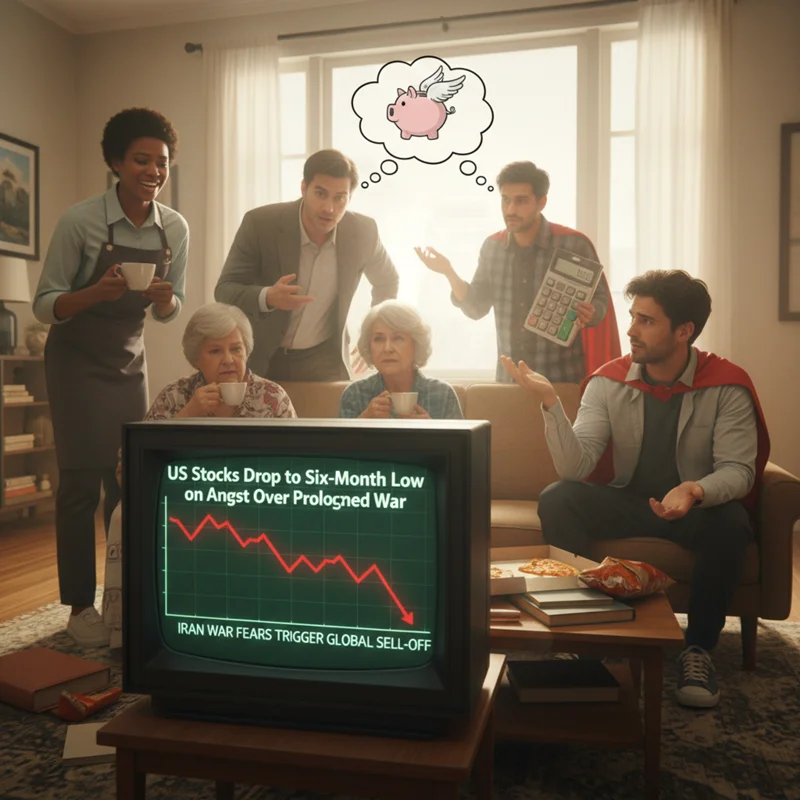
US stock markets have plunged to a six-month low, with major indices entering correction territory, as investor anxiety intensifies over the potential for a prolonged Iran war and its severe economic repercussions. This widespread decline signals a significant shift towards risk aversion.
💡 Why It Matters
This broad market correction directly impacts your portfolio's value and signals increased risk aversion across the investment landscape. It suggests investors are bracing for a sustained period of economic uncertainty and could prompt a re-evaluation of your investment strategy.
📈 Market Impact
Negative for equity markets across all sectors, indicating potential for further declines and heightened volatility. Investors may shift towards defensive assets, cash, or reallocate capital to less risky sectors, impacting overall market liquidity and valuations.
🎯 Watch:
$SPX
2. Global oil prices climb for 5th straight week as U.S. sends more military might into Middle East

Brent crude prices have surged for the fifth consecutive week, driven by escalating geopolitical tensions in the Middle East, including the US deploying additional military assets. This sustained rally is significantly pushing global energy costs higher and exacerbating inflation expectations worldwide.
💡 Why It Matters
Rising oil prices directly translate to higher costs for consumers (gas, utilities) and businesses (transportation, manufacturing), eroding purchasing power and corporate profits. A prolonged increase could lead to stagflationary pressures, forcing central banks to maintain tighter monetary policies, which impacts borrowing costs and economic growth.
📈 Market Impact
Negative for energy-importing nations and most industries due to increased operational costs. Positive for oil producers and energy sector stocks. This fuels inflation concerns, potentially leading to higher interest rates and lower equity valuations across many non-energy sectors.
🎯 Watch:
$XOM
3. Trump says he doesn't want Iran war ceasefire, but is considering 'winding down' military ops
President Trump delivered conflicting statements regarding the Iran conflict, asserting he doesn't desire a ceasefire but is simultaneously considering winding down military operations. He also vowed operations would continue to prevent Iran from 'ever rebuilding,' creating profound uncertainty about the conflict's future trajectory.
💡 Why It Matters
The US administration's stance is the primary driver of geopolitical risk and energy market volatility. Such conflicting signals from the President can dramatically increase market uncertainty, leading to rapid and unpredictable shifts in investor sentiment and impacting global stability.
📈 Market Impact
Likely to sustain a high geopolitical risk premium on oil prices. Could trigger further market volatility and a flight to safety, or conversely, a sudden rally if the 'winding down' is perceived as genuine de-escalation. Bond markets could remain under pressure due to uncertainty.
4. Gold drops nearly 10% in worst weekly rout since 2011
Gold prices experienced their most significant weekly decline since 2011, plummeting almost 10%. This sharp rout is unusual during a period of heightened geopolitical tension and suggests a major re-evaluation of safe-haven assets or underlying market stress.
💡 Why It Matters
Gold is traditionally a safe-haven asset, sought during uncertainty. Its sharp decline, especially amidst conflict, is a critical signal. It could indicate a broad market liquidity crunch, significant profit-taking, or a belief that other assets (like the dollar) are now more attractive despite global risks. This challenges conventional portfolio diversification strategies.
📈 Market Impact
Strongly negative for gold investors and those relying on gold as an inflation hedge or safe haven. Could signal broader market liquidity issues or a shift away from traditional hedges. May also reflect a stronger US dollar or rising real yields, impacting inflation expectations.
5. Financial stocks on pace for worst first quarter since 2020 as private credit cracks flash 'yellow warning'
Financial sector stocks are heading for their worst first-quarter performance since 2020, as growing concerns emerge over "cracks" appearing in the private credit market. This signals potential stress within the broader financial system and indicates looming economic headwinds.
💡 Why It Matters
The health of the financial sector is a crucial barometer for overall economic stability. Weakness here, particularly in the less-regulated private credit market, could foreshadow broader economic difficulties, tighter lending conditions for businesses and consumers, and potential systemic risks.
📈 Market Impact
Strongly negative for financial sector stocks. Could lead to increased caution from investors regarding credit risk and overall market stability, potentially impacting capital availability for businesses and slowing economic activity.
6. Fed Governor Waller urges caution for now, says rate cuts possible later in the year
Federal Reserve Governor Christopher Waller indicated that while immediate caution is warranted, interest rate cuts remain a possibility later in the year. This statement offers some clarity on the Fed's patient but flexible approach amidst current economic uncertainties and persistent inflation concerns.
💡 Why It Matters
The Federal Reserve's stance on interest rates is a primary driver of market sentiment, borrowing costs, and economic activity. Waller's comments suggest the Fed is balancing inflation control with potential future easing, which is crucial for your financial planning, investment decisions, and economic forecasts.
📈 Market Impact
NEUTRAL to slightly POSITIVE, as it keeps the door open for future rate cuts, but acknowledges current economic caution. This could lead to continued volatility as markets weigh inflation against potential easing, impacting bond yields, currency strength, and equity valuations.
7. Super Micro co-founder indicted on Nvidia smuggling charges leaves board
The co-founder of Super Micro Computer has been indicted on charges of smuggling Nvidia chips and has subsequently resigned from the company's board. This development raises serious corporate governance and legal concerns for the high-profile tech company.
💡 Why It Matters
This incident is a significant blow to Super Micro's reputation and could lead to intense regulatory scrutiny. It highlights the critical importance of supply chain integrity and compliance, especially in the sensitive semiconductor industry, which can severely impact investor confidence in the company and potentially the broader sector.
📈 Market Impact
Strongly negative for Super Micro (SMCI) stock, as evidenced by its 33% drop. Could erode investor confidence in the company's management and potentially raise concerns about supply chain risks across other firms in the semiconductor industry, leading to broader sector caution.
🎯 Watch:
$SMCI
$NVDA
8. Elon Musk misled Twitter investors ahead of $44 billion acquisition, jury says
A jury has found Elon Musk liable for misleading Twitter investors prior to his $44 billion acquisition of the company. This verdict carries significant financial and reputational consequences for Musk and could set a precedent for future high-profile corporate transactions.
💡 Why It Matters
This ruling establishes a precedent for accountability in high-stakes corporate takeovers and could influence how public figures communicate about their intentions regarding acquisitions. For investors, it underscores the legal risks associated with public statements during M&A processes and the importance of due diligence.
📈 Market Impact
Negative for Elon Musk's personal brand and potentially for Tesla (TSLA) if it distracts him or leads to further financial penalties. Could increase scrutiny on corporate communications during M&A, potentially slowing down deal-making and increasing legal risks for executives.
🎯 Watch:
$TSLA
9. How the red-hot AI data center boom is igniting demand for a new, lucrative career path: Trade workers
The rapid expansion of AI data centers is creating unprecedented demand for skilled trade workers, leading to a new and lucrative career path. This trend highlights a significant shift in labor market needs driven by technological advancements and massive infrastructure build-out.
💡 Why It Matters
This story reveals a strong underlying economic driver for the AI sector beyond just software, indicating robust and sustained infrastructure investment. For individuals, it points to new labor market opportunities and potential career shifts, impacting education and workforce development. For investors, it highlights growth areas in supporting industries.
📈 Market Impact
Positive for construction, engineering, and vocational training sectors. Suggests sustained growth in the AI infrastructure space, benefiting companies involved in data center construction, equipment manufacturing, and related services. Could lead to wage inflation in skilled trades.
💭 Final Thoughts
It's a wild ride out there, but staying informed is your best defense. Keep an eye on those headlines and remember, even in chaos, opportunities can emerge!