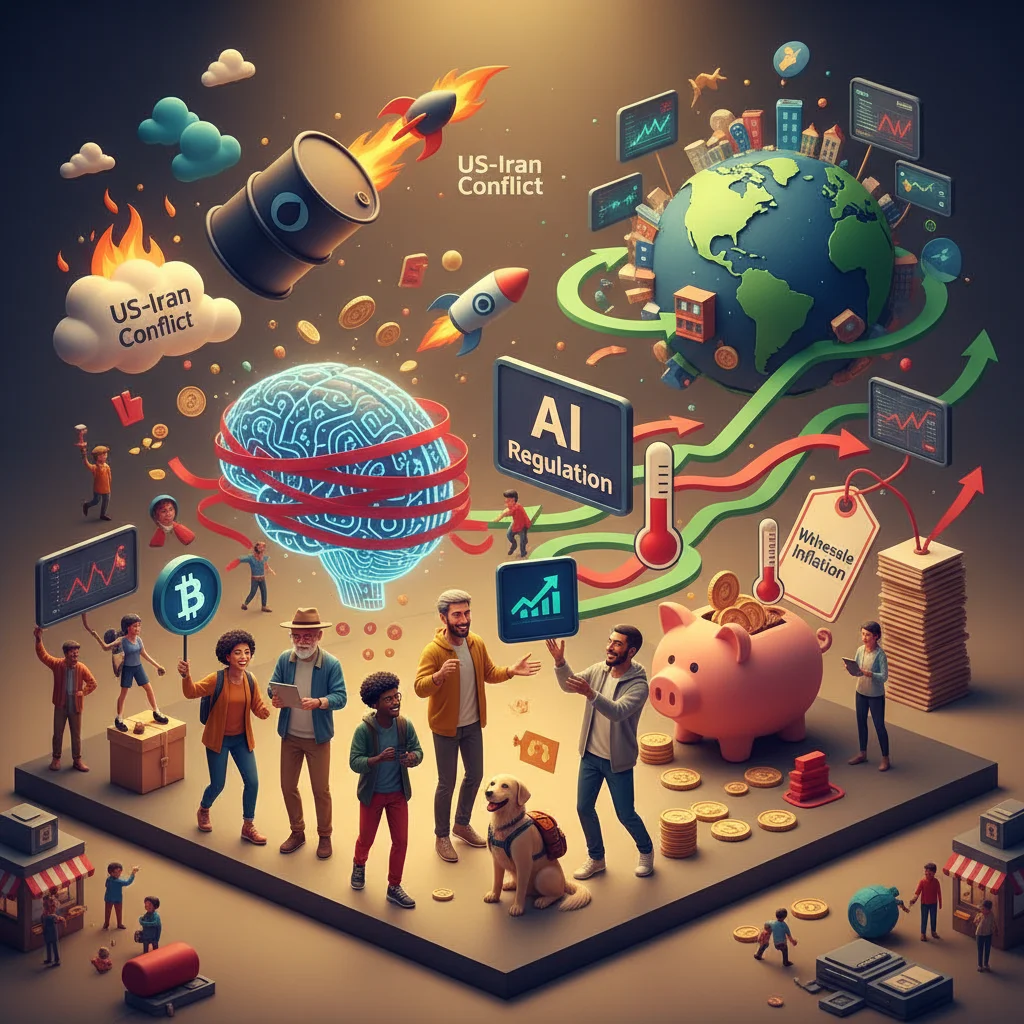
Global markets took a nosedive today as escalating US-Iran tensions sent oil soaring and Bitcoin crashing. Hotter-than-expected inflation data fueled stagflation fears, prompting a major bank to downgrade U.S. stocks. Investors are navigating a complex landscape of war, inflation, and tech disruption, leading to a broad flight from risk assets.
📊 Market Snapshot
🌍 What's Happening
Global markets are gripped by a significant risk-off sentiment today, primarily driven by the escalation of the US-Iran conflict, which has sent oil prices soaring and triggered a sharp decline in Bitcoin. Compounding geopolitical anxieties, hotter-than-expected wholesale inflation data (PPI) has fueled stagflation fears, leading to a UBS downgrade of the U.S. stock market. The AI sector presents a mixed picture, with some firms securing government deals while others face blacklisting and widespread job cuts, intensifying concerns about AI's impact on employment and credit markets. Overall, investors are navigating a complex landscape of war, inflation, and technological disruption, prompting a flight from risk assets.
Today's Hot Topics:
📰 Top Stories
1. Bitcoin falls below $64,000 after U.S. and Israel launch strikes on Iran

Bitcoin's price plummeted below $64,000 immediately after news broke of U.S. and Israeli military strikes against Iran. This sharp and rapid reaction underscores the cryptocurrency market's sensitivity to escalating geopolitical tensions.
💡 Why It Matters
This event challenges Bitcoin's narrative as a 'safe-haven' asset, demonstrating its sensitivity to global geopolitical instability. For crypto investors, it highlights the need to consider how major international conflicts can trigger rapid shifts in sentiment and capital flows, impacting your portfolio's risk profile.
📈 Market Impact
The sharp decline in Bitcoin's price signals a broader risk-off sentiment across the crypto market. Investors appear to be rotating out of speculative assets, either seeking traditional safe havens or liquidating positions to cover losses elsewhere, impacting overall crypto valuations negatively.
🎯 Watch:
$BTC-USD
2. Core wholesale prices rose 0.8% in January, much more than expected

Core wholesale prices, measured by the Producer Price Index (PPI), surged by 0.8% in January, significantly surpassing market expectations. This hotter-than-anticipated inflation reading has intensified concerns about persistent price pressures rippling through the economy.
💡 Why It Matters
Higher wholesale inflation often foreshadows increased consumer prices, potentially compelling central banks to maintain tighter monetary policies for an extended period. For investors, this means a higher risk of dampened economic growth, reduced corporate earnings, and stagflation, which could impact your portfolio's sector allocation and interest-rate sensitive holdings.
📈 Market Impact
The hot PPI reading initially triggered a fall in the 10-year Treasury yield below 4% as stagflation risks emerged. Stock markets slid across the board, with investors retreating from risk assets, as anxieties about persistent inflation and future interest rate hikes intensified.
3. UBS downgrades the U.S. stock market. Here's what has the investment bank worried
UBS, a prominent investment bank, has downgraded its outlook for the U.S. stock market, citing growing concerns over persistent inflation, escalating geopolitical instability, and the increasing potential for an economic slowdown.
💡 Why It Matters
A downgrade from a major institution like UBS can significantly sway institutional investor sentiment and capital allocation. For retail investors, this signals a more cautious outlook for the broader market, suggesting increased volatility and potentially reduced investment flows into U.S. equities. It's a signal to review your portfolio's risk exposure and consider defensive strategies.
📈 Market Impact
This downgrade reinforces the broader risk-off sentiment, potentially exacerbating market declines, especially when combined with other negative news like rising inflation and geopolitical tensions. Investors are likely to re-evaluate their exposure to U.S. stocks, favoring more defensive positions.
4. WBD employees fear coming wave of job losses as Paramount tops Netflix's bid to acquire company
Paramount has successfully outbid Netflix to acquire Warner Bros. Discovery in a $57.5 billion deal, sparking fears of significant job losses among WBD employees. While poised to create a media giant, the acquisition involves a complex mix of junk and high-grade debt, raising concerns about the combined entity's financial health and integration challenges.
💡 Why It Matters
This massive consolidation reshapes the media and streaming landscape, impacting competition and content production. For investors, it highlights the risks associated with large-scale M&A, particularly the substantial debt load and potential integration challenges that could affect the combined company's long-term performance. Evaluate your holdings in media companies for potential ripple effects.
📈 Market Impact
Paramount's stock (PARA) is likely to face volatility due to the significant debt burden and anticipated integration challenges. The deal intensifies competition in the streaming wars, potentially impacting other media companies. S&P analysts have already indicated a strained rating for Paramount post-acquisition, signaling financial pressure.
🎯 Watch:
$WBD
$PARA
$NFLX
5. OpenAI strikes deal with Pentagon, hours after rival Anthropic was blacklisted by Trump
OpenAI secured a deal with the Pentagon, a move that starkly contrasts with its rival AI firm Anthropic, which was blacklisted by the Trump administration for refusing Pentagon demands. Anthropic is reportedly preparing to sue over being labeled a 'security risk,' highlighting escalating tensions between AI development and national security interests.
💡 Why It Matters
This saga underscores AI's increasing strategic importance for defense and the government's growing willingness to exert control over critical technology. For investors, it highlights how government alignment or opposition can create significant regulatory hurdles or competitive advantages, fundamentally shaping the future landscape and investment opportunities within the AI industry.
📈 Market Impact
OpenAI's deal could significantly boost its valuation and market position, potentially benefiting key investors like Amazon (AMZN). Conversely, Anthropic's blacklisting and impending legal challenge create substantial uncertainty for the company and could deter other AI firms from resisting government demands, impacting their market access and growth prospects.
🎯 Watch:
$AMZN
6. Block cuts about half its workforce — how to move forward after a mass layoff, career experts say
Jack Dorsey's Block (formerly Square) announced significant job cuts, reducing its workforce by about half. This drastic move, combined with Dorsey's prior statements about AI replacing jobs, has intensified fears of widespread AI-driven job displacement across various industries.
💡 Why It Matters
Mass layoffs at a prominent tech company like Block, especially one led by a vocal proponent of AI's transformative power, underscore the potential for AI to significantly disrupt labor markets. For investors, this has broader social and economic implications, potentially impacting consumer spending, economic stability, and even credit markets, as highlighted by concerns over AI-related loan risks.
📈 Market Impact
Software stocks, including Block (SQ), experienced declines as the news fueled further AI-related anxieties among investors. JPMorgan also issued a warning that up to $150 billion of loans in CLOs face AI risk, indicating broader credit market concerns tied to AI's disruptive potential and its impact on employment.
🎯 Watch:
$SQ
💭 Final Thoughts
Today was a stark reminder that markets hate uncertainty. Stay sharp, keep an eye on the headlines, and remember that every challenge brings new insights!