
Today's market is a whirlwind of AI-driven surges, political policy shocks, and shifting economic landscapes. From memory shortages fueling tech giants to Trump's bold proposals on credit card rates and Venezuelan oil, investors are navigating a complex web of opportunities and risks. Get ready for a deep dive into the forces shaping your portfolio.
📊 Market Snapshot
🌍 What's Happening
The market today is heavily influenced by the ongoing AI boom, with reports of memory shortages driving price surges and a global race for AI dominance shaping investment strategies. Political developments, particularly around former President Trump's potential policies, are creating significant ripples, from proposed caps on credit card interest rates to a controversial new approach to Venezuela's oil industry. Meanwhile, the healthcare sector is bracing for a transformative year with the rise of obesity pills, while the labor market faces a 'hiring recession.' Investors are navigating these diverse forces, with some sectors like defense and gold showing bullish sentiment amidst global uncertainties.
Today's Hot Topics:
📰 Top Stories
1. AI memory is sold out, causing an unprecedented surge in prices
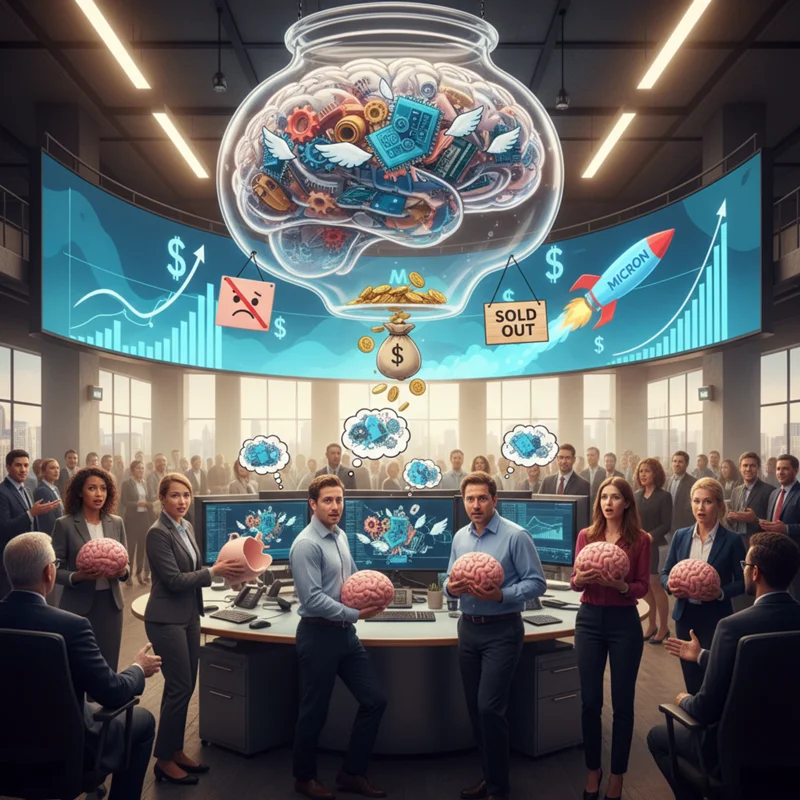
The demand for high-bandwidth memory (HBM), crucial for AI chips, has far outstripped supply, leading to an unprecedented surge in prices. Major players like Micron are seeing their price targets raised due to this AI-driven re-rating. This shortage highlights the intense competition and rapid growth within the AI sector.
💡 Why It Matters
This indicates a critical bottleneck in the AI supply chain, which could impact the growth trajectory and profitability of AI hardware manufacturers and companies reliant on advanced AI infrastructure. It also signals strong underlying demand for AI.
📈 Market Impact
Positive for HBM manufacturers (e.g., Micron, Samsung, SK Hynix) and potentially negative for companies needing to acquire these components at higher costs. Could lead to increased R&D into alternative memory solutions or production capacity expansion.
🎯 Watch:
$MU $NVDA 2. Trump Calls for 10% Cap on Credit-Card Interest Rates

Former President Trump has proposed a 10% cap on credit card interest rates, a move that could significantly impact the financial services industry. This proposal, if enacted, aims to provide relief to consumers but would likely squeeze profit margins for credit card issuers and banks.
💡 Why It Matters
This is a direct intervention into a major consumer finance market. It could alter consumer spending habits, debt management, and the profitability of a significant segment of the financial sector.
📈 Market Impact
Negative for credit card issuers and banks (e.g., Capital One, Discover, JPMorgan Chase, Bank of America) as their revenue from interest payments would be capped. Potentially positive for consumers struggling with high-interest debt.
🎯 Watch:
$COF $DFS $JPM $BAC 3. What the Big Oil executives told Trump about investing in Venezuela
Former President Trump is actively engaging with Big Oil executives regarding investments in Venezuela, signaling a potential shift in U.S. foreign policy and energy strategy. This comes amidst discussions of lifting sanctions and aims to revive Venezuela's oil industry, potentially impacting global oil markets and the geopolitical landscape.
💡 Why It Matters
A change in U.S. policy towards Venezuela's oil could significantly increase global oil supply, influence oil prices, and create new investment opportunities (or risks) for energy companies. It also has major geopolitical implications for the region.
📈 Market Impact
Potentially positive for oil majors looking for new production avenues, but could depress global oil prices if Venezuelan supply significantly increases. Indian refiners are already eyeing opportunities. The situation is complex due to existing creditors and political instability.
🎯 Watch:
$XOM $CVX $PSX 4. 2026 is the year of obesity pills. Here's how they could reshape the GLP-1 market
The year 2026 is anticipated to be a pivotal year for obesity pills, particularly GLP-1 agonists, as new oral formulations are expected to gain significant traction. This shift from injectables to pills could dramatically expand market access and reshape the competitive landscape for pharmaceutical giants like Novo Nordisk and Eli Lilly.
💡 Why It Matters
The introduction of more convenient oral GLP-1 treatments could lead to a massive expansion of the obesity drug market, impacting healthcare providers, insurers, and the pharmaceutical industry's revenue streams. It represents a significant medical and commercial breakthrough.
📈 Market Impact
Highly positive for pharmaceutical companies developing and manufacturing these drugs (e.g., Novo Nordisk, Eli Lilly). Could negatively impact companies in related sectors like medical devices for diabetes management or even certain food/beverage industries if consumption patterns shift.
🎯 Watch:
$NVO $LLY 5. The crypto ATM's days in America may be numbered
Regulatory scrutiny and concerns over fraud and scams are threatening the future of crypto ATMs in the U.S. Authorities are increasingly looking to impose stricter regulations or even ban these machines, which could significantly impact the accessibility and adoption of cryptocurrencies for some users.
💡 Why It Matters
This development could reduce a key on-ramp for new crypto users and impact businesses operating these ATMs. It signals a broader trend of increasing regulatory oversight in the cryptocurrency space, which can affect investor confidence and market liquidity.
📈 Market Impact
Negative for crypto ATM operators and potentially for broader crypto adoption if accessibility is reduced. Could be seen as a step towards greater market maturity and investor protection by some regulators.
6. We're in a 'hiring recession,' economist says — how job seekers can stand out
An economist suggests the U.S. is experiencing a 'hiring recession,' characterized by a slowdown in job creation and increased competition for available roles, even if the overall unemployment rate remains low. This indicates a tightening labor market where companies are more cautious about expanding their workforce.
💡 Why It Matters
A 'hiring recession' can signal broader economic cooling, impacting consumer confidence and spending. For businesses, it might mean slower growth or a focus on efficiency over expansion. For investors, it suggests potential headwinds for consumer-driven sectors and a shift in corporate spending.
📈 Market Impact
Potentially negative for consumer discretionary stocks and sectors reliant on robust employment growth. Could be seen as a sign of disinflationary pressures, which might influence central bank policy.
7. US corporate bond sales hit $95bn in busiest week since Covid pandemic
U.S. companies have issued $95 billion in corporate bonds this week, marking the busiest week for sales since the Covid-19 pandemic. This surge indicates strong corporate demand for financing and investor appetite for corporate debt, possibly driven by favorable interest rates or strategic capital needs.
💡 Why It Matters
High corporate bond issuance suggests companies are actively raising capital for investments, refinancing, or M&A, which can be a sign of economic confidence. It also reflects liquidity in the credit markets and investor willingness to lend.
📈 Market Impact
Generally positive, indicating healthy corporate activity and access to capital. Could lead to increased investment and growth for companies. However, a rapid increase in corporate debt could also raise concerns about leverage in the long term.
8. Global AI Race Shows Asia Leading as Stocks Start 2026 With Bang
The global competition in Artificial Intelligence is intensifying, with Asia showing strong leadership and related stocks performing exceptionally well at the start of 2026. This highlights the significant investment and innovation occurring in the AI sector worldwide, particularly in Asian markets.
💡 Why It Matters
The leadership in AI development has profound implications for technological dominance, economic growth, and national security. Investor focus on AI stocks, especially in leading regions, indicates where significant capital is flowing and where future growth is expected.
📈 Market Impact
Positive for AI-focused companies and technology sectors, particularly those in Asia. Could lead to increased cross-border investment and competition. Highlights the continued bullish sentiment around AI.
9. Activist Elliott shakes up leadership at Lululemon. How the firm can help reinvigorate the athleisure giant
Activist investor Elliott Management has initiated changes in Lululemon's leadership, aiming to revitalize the athleisure giant. This move suggests Elliott sees untapped potential in Lululemon and plans to implement strategies to boost performance and shareholder value.
💡 Why It Matters
Activist investor involvement often signals significant changes in corporate strategy, operations, or governance, which can lead to improved financial performance. For investors, it's a signal to watch for potential catalysts in Lululemon's stock.
📈 Market Impact
Potentially positive for Lululemon's stock if Elliott's strategies are successful in driving growth and profitability. Could also signal increased scrutiny on other underperforming companies in the retail sector.
🎯 Watch:
$LULU 10. US Inflation to Pick Up After Muddy November CPI
Following a 'muddy' November CPI report, analysts are now forecasting a pickup in U.S. inflation. This suggests that disinflationary trends might be stalling or reversing, potentially influencing the Federal Reserve's monetary policy decisions and market expectations for interest rates.
💡 Why It Matters
A resurgence in inflation could lead to a more hawkish stance from the Federal Reserve, impacting interest rates, bond yields, and equity valuations. It affects purchasing power and corporate costs, making it a critical economic indicator for investors.
📈 Market Impact
Potentially negative for bond markets (higher yields), growth stocks (discounting future earnings at higher rates), and consumer spending if real wages decline. Could be positive for inflation-hedging assets like commodities or value stocks.
💭 Final Thoughts
From AI's insatiable hunger to political curveballs, today's market is a puzzle. Keep an eye on those GLP-1s and corporate debt – 2026 is just getting started! 🎢